In this post
Finding high-margin, profitable crafts to make and sell at weekend markets and online storefronts requires balancing material costs with production speed. Handmade toys hold an enduring place in craft sales because buyers consistently look for soft, durable gifts for children and nursery decor. Knitted stuffed animals offer an intermediate knitter a reliable way to turn standard skeins into high-value inventory. Using intermediate shaping methods, simple seaming, and hand-embroidered facial details, you can produce full-sized plush companions that catch a shopper’s eye across a busy market aisle. Each toy in this collection measures approximately 10-12 inches (25-30 cm) tall and takes roughly 4-6 hours to complete from cast-on to final seaming. By focusing on classic silhouettes, modern pastel palettes, and smart batch-construction habits, you can build a consistent stock of boutique-quality toys that price well and sell reliably.
Stuffed toys stand out in retail environments because they carry an immediate, tactile connection for gift shoppers. When browsing a table of handmade goods, customers naturally reach out to feel the soft texture of knitted fabric. This sensory appeal gives knitted animals a high perceived value compared to flat-knit accessories like scarves or dishcloths. Shoppers gladly pay higher prices for a three-dimensional character with distinct personality, especially when buying for baby showers, birthdays, or holiday gifts.
The profit margins on hand-knitted toys remain consistently healthy because the physical materials cost very little. A single 100-200 yard (91-183 m) skein of worsted weight acrylic yarn or DK weight cotton yarn easily yields the main body pieces for an entire 10-12 inch (25-30 cm) toy. When you combine low raw material costs with intermediate shaping techniques that work up in 4-6 hours, your return on time invested increases significantly. Embroidering the facial features rather than applying plastic hardware keeps costs minimal while expanding your market to safety-conscious parents seeking soft toys with no hard plastic pieces.
How to Choose a Profitable Project for Your Skill Level and Yarn
Selecting the right balance between yarn weight, needle gauge, and construction style determines how quickly you turn raw yarn into finished inventory ready for your sales table.
- Match gauge to prevent fiberfill show-through: Work at a firm gauge of 22 stitches and 30 rows per 4 inches (10 cm) in stockinette stitch using 3.5 mm (US 4) knitting needles. Dropping needle size down from the yarn label recommendation creates a dense fabric that keeps the 12 oz (340 g) polyfill stuffing securely hidden inside.
- Weigh production time against retail price: Choose patterns that take no more than 4-6 hours per toy. Complex cable patterns or tiny colorwork slow down your knitting speed without necessarily increasing what a customer will pay for a plush companion.
- Standardize yarn weights across your line: Stick to worsted weight (4) acrylic yarn or DK weight (3) cotton yarn across your entire collection. Using consistent yarn weights means you can reuse the same 3.5 mm (US 4) needles, maintain uniform gauge, and swap scrap yarn across different toy designs for embroidered noses and mouths.
- Rely on sturdy, clean assembly methods: Use the mattress stitch on right sides to join flat-knitted limbs and bodies. Invisible, strong seams withstand active play and create a clean, store-ready finish that justifies premium craft fair pricing.
Pro tip: Always test-knit a small swatch on your 3.5 mm (US 4) needles to ensure the fabric matches gauge and keeps the polyfill enclosed.
Classic Woodland and Farm Animals
Woodland and traditional farm creatures remain the most reliable year-round sellers in handmade toy booths because their timeless shapes appeal across multiple generations.
| Toy Style | Yarn Weight & Type | Needle Size | Finished Size | Production Time |
|---|---|---|---|---|
| Green Knitted Bear | Worsted weight (4) acrylic | 3.5 mm (US 4) | 10-12 in (25-30 cm) | 4-6 hours |
| Cream Knitted Bear | Worsted weight (4) acrylic | 3.5 mm (US 4) | 10-12 in (25-30 cm) | 4-6 hours |
| Blue Knitted Bunny | DK weight (3) cotton / worsted acrylic | 3.5 mm (US 4) | 10-12 in (25-30 cm) | 4-6 hours |
| Orange Mini Plush | Worsted weight (4) scrap yarn | 3.5 mm (US 4) | 4-5 in (10-13 cm) | 1.5-2 hours |
| Yellow Mini Plush | Worsted weight (4) scrap yarn | 3.5 mm (US 4) | 4-5 in (10-13 cm) | 1.5-2 hours |
Green Knitted Bear
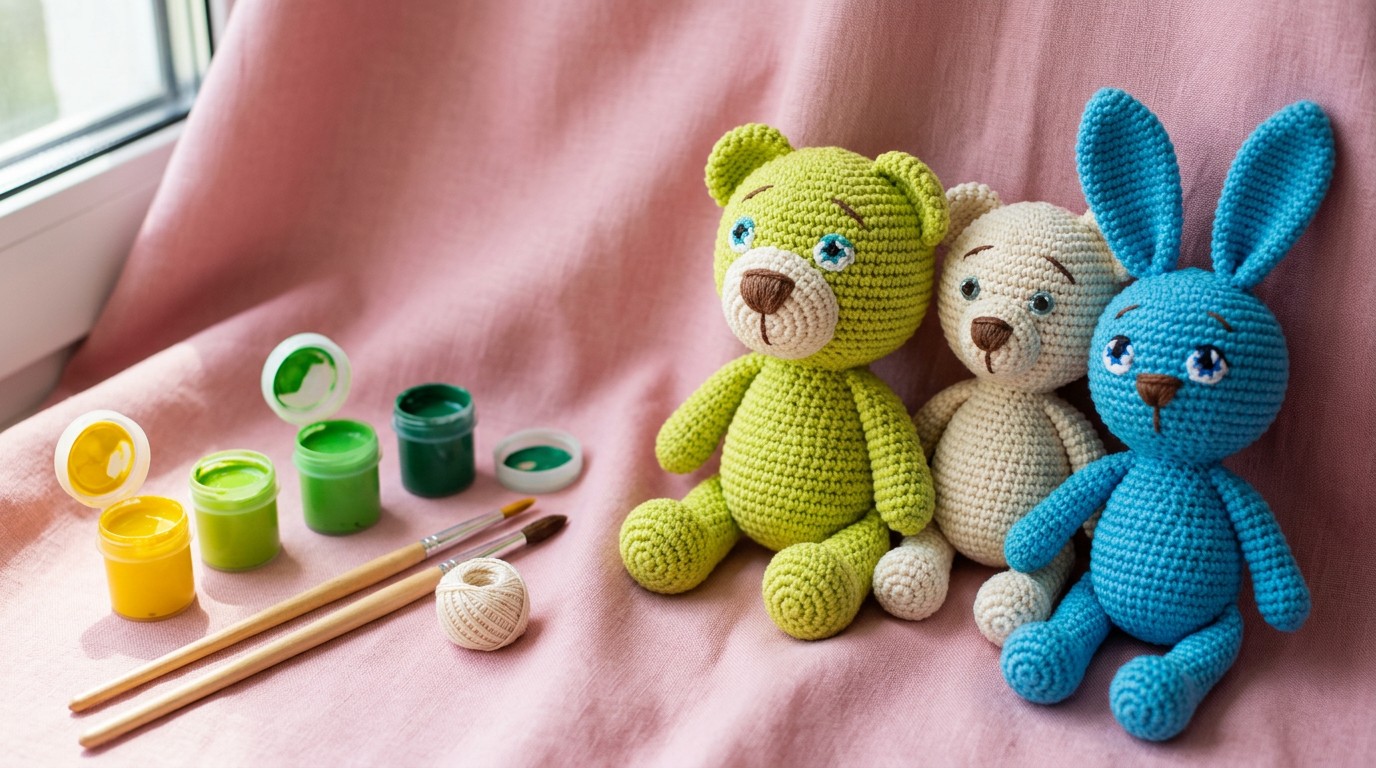
The green knitted bear brings an earthy, modern twist to the traditional stuffed teddy. Worked in worsted weight (4) acrylic yarn on 3.5 mm (US 4) needles, this intermediate project relies on simple increases and decreases to shape a rounded muzzle, sturdy legs, and curved ears. The body and head are worked in pieces, seamed using mattress stitch, and filled firmly with polyfill fiberfill stuffing to maintain a structured 10-12 inch (25-30 cm) height. Facial features are hand-embroidered using black scrap yarn, giving each bear an approachable expression without adding hard components.
When pricing the green bear, calculate your base material costs (around 100-200 yards / 91-183 m of yarn plus stuffing) and factor in your 4-6 hour labor window. Display this bear seated upright next to neutral tones on your booth table to draw the attention of shoppers seeking modern nursery decor.
Cream Knitted Bear
The cream knitted bear offers classic, heirloom-style appeal that fits traditional nursery palettes and baby shower gifting. Using the same intermediate pattern structure as the green bear, this version utilizes 1 skein (approx 100-200 yds / 91-183 m) of cream worsted weight yarn worked at a gauge of 22 sts x 30 rows = 4 inches (10 cm). The light background provides high contrast for dark brown or black embroidered eyes, nose, and smiling mouth lines.
For efficient market prep, knit the green and cream bears in tandem. Working two identical body shapes back-to-back speeds up your muscle memory across the increase and decrease rows, shaving up to an hour off total assembly time per toy.
Pro tip: When embroidering facial features on light-colored yarn, insert your embroidery needle through the back of the neck and travel through the polyfill inside the head to prevent dark knots from showing through the stitches.
Modern Pastel Companions
Soft pastel colorways appeal directly to contemporary gift shoppers looking for soothing, gender-neutral nursery accents and soft playtime companions.
Blue Knitted Bunny
The blue knitted bunny features long, upright ears, gently tapered limbs, and an elongated torso that finishes at approximately 10-12 inches (25-30 cm) tall. Knitted from 1 skein of soft blue worsted weight acrylic yarn or DK weight cotton yarn using 3.5 mm (US 4) needles, this design uses symmetrical paired decreases to shape the narrow base of the ears and feet. The head requires smooth stockinette shaping to give a flat, even surface for embroidered noses and eyes worked in dark scrap yarn.
Handmade toys intended for children must prioritize physical security and durable construction. Securely seam every limb with heavy-duty mattress stitches, running the yarn tail through the joint three times before burying the end deep inside the torso’s polyfill stuffing. Avoid adding small external embellishments, loose buttons, or metal wires inside the ears; all parts must be knit, stuffed, and sewn firmly to withstand regular handling.
Quick-Make Mini Plush Toys
Offering a varied price point on your craft table ensures that every shopper can walk away with a handmade item, even on a modest budget.
Orange Small Plush Toy
The orange small plush toy scales down your classic intermediate shaping techniques into a compact 4-5 inch (10-13 cm) character that knits in under 2 hours. Utilizing small amounts of leftover orange worsted weight yarn from your larger projects, this pocket-sized toy is knit flat on 3.5 mm (US 4) needles, stuffed with a handful of polyfill, and closed with mattress stitch. Embroider eyes and a small triangular nose using dark scrap yarn.
These smaller plushies serve as high-volume add-on items at craft fairs. Position them near your point of sale as budget-friendly gifts or stocking stuffers, allowing you to monetize yarn oddments that would otherwise sit unused in your storage bins. Note that items under 5 inches with small attached parts are not suitable for children under 3 years of age.
Yellow Small Plush Toy
The yellow small plush toy mirrors the orange companion in construction speed and material efficiency. Worked in bright yellow worsted weight acrylic or DK cotton scraps, it introduces a sunny accent color to your product display. Working several of these mini plushies alongside your larger 10-12 inch (25-30 cm) bears creates a cohesive, tiered visual collection that makes your booth look professionally curated.
Because these toys consume negligible yardage and pack quickly, they provide an excellent return on investment. You can easily knit two to three yellow plush characters in an evening while using up the remaining yardage from full-sized skeins.
Pro tip: Keep a dedicated basket of pre-cut 18-inch (45 cm) lengths of black and brown scrap yarn near your finishing station so you can embroider multiple mini plush faces in a single sitting without stopping to measure and cut new strands.
Tips for Knitting and Assembling Toys Faster
Increasing your production speed is the most direct way to boost hourly earnings on hand-knitted merchandise.
- Batch-knit identical pattern pieces: Knit all four limbs, then both ears, and finally the torsos for three or four animals at once. Repeating the same stitch sequences builds rapid muscle memory on your 3.5 mm (US 4) needles and reduces row-counting errors.
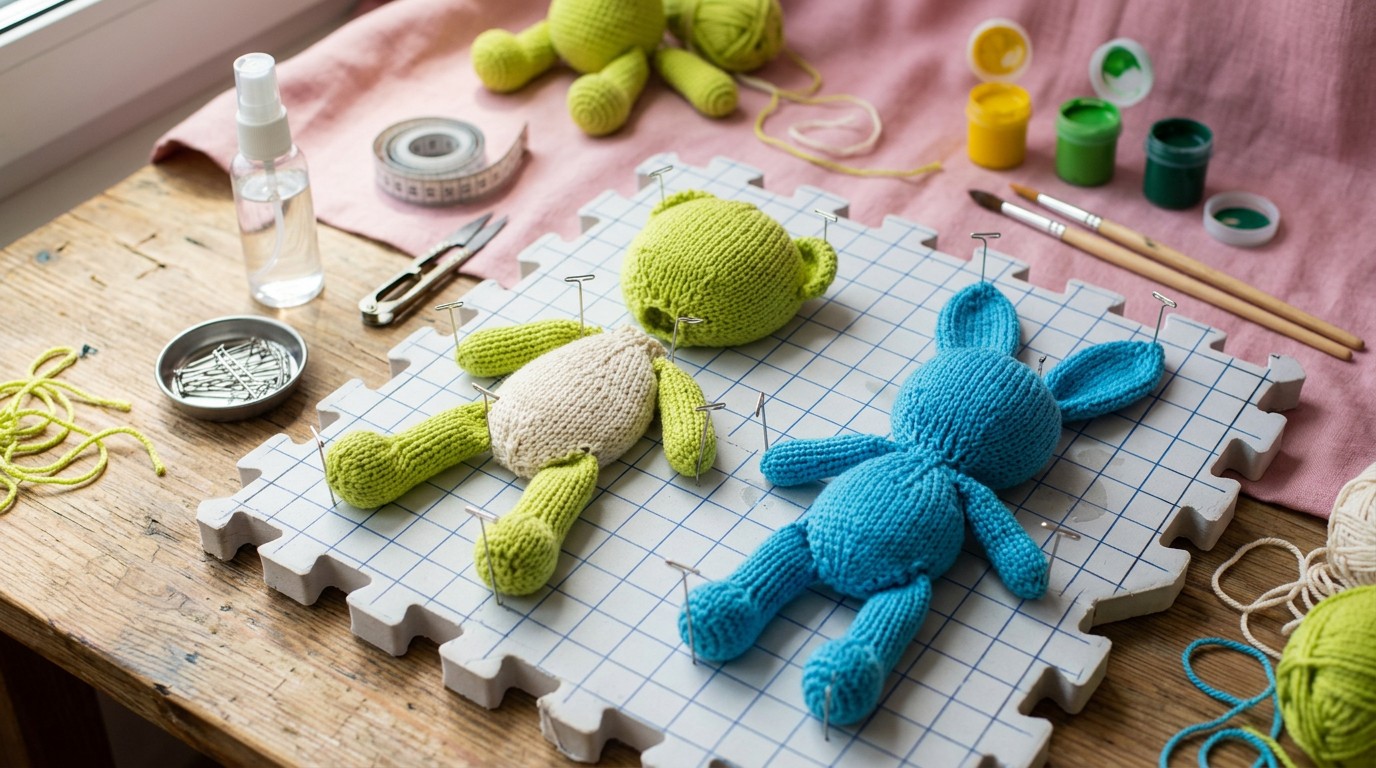
- Steam-block pieces before seaming: Give flat-knitted limbs and body panels a gentle steam block on your blocking mat before sewing. Flattening the curled stockinette edges makes mattress seaming faster, more accurate, and perfectly straight.
- Pre-portion your polyfill stuffing: Divide your 12 oz (340 g) bag of polyfill fiberfill into separate bowls for heads, bodies, and limbs before assembling. Stuffing each component with a consistent weight ensures that every 10-12 inch (25-30 cm) animal maintains identical firmness and proportions across your entire inventory.
- Assemble with long running yarn tails: When casting off individual pieces, leave a 12-16 inch (30-40 cm) yarn tail. Using the original knitting yarn for seaming eliminates the need to join new working threads, saving time and leaving fewer loose ends to weave in at the finish.
Frequently Asked Questions
What are popular crafts to make and sell for beginners?
Simple knitted washcloths, pot holders, and garter stitch scarves make great entry-level items because they require no complex shaping. As skills progress, structured items like stuffed animals made with intermediate increases, decreases, and mattress seaming offer significantly higher profit margins.
How do I price handmade knitted stuffed animals?
Calculate your retail price by adding the cost of yarn and stuffing to your hourly labor rate multiplied by production time (4-6 hours), then add a markup for overhead and booth fees. For a standard 10-12 inch (25-30 cm) intermediate toy, market prices typically range from $35 to $65 depending on detail and materials.
What yarn is suitable for selling knitted toys?
Worsted weight (4) acrylic yarn and DK weight (3) cotton yarn are the industry standards for toy making. Both fibers offer high durability, machine-washable care convenience for parents, low cost per yard, and excellent stitch definition on 3.5 mm (US 4) knitting needles.
How long does it take to knit a stuffed animal?
An intermediate knitter typically spends 4 to 6 hours completing a 10-12 inch (25-30 cm) stuffed animal from casting on to final facial embroidery. Working in batches—knitting all limbs first, then bodies, followed by assembly—can reduce average production time per toy by up to 20 percent.
Turning knitted stuffed animals into successful crafts to make and sell comes down to clean stitchwork, reliable safety construction, and disciplined batch production. By sticking with durable worsted and DK yarns, a tight gauge on 3.5 mm (US 4) needles, and hand-embroidered facial details, you create plush companions that stand out at craft fairs and online shops. Focus on producing small collections of classic bears and modern bunnies in coordinated palettes, keep your finishing habits fast and uniform, and you will build a dependable, rewarding handmade toy business that attracts repeat gift shoppers season after season.