In this post
- Where to Buy Unique Fabrics and Notions
- Understanding Specialty Sewing Trims and Tapes
- Sourcing Quilting Cotton and Base Fabrics
- Online Marketplaces for Hidden Treasures
- How to Identify Quality When Buying Online
- Building a Versatile Notions Stash
- Pro Tips for Sourcing on a Budget
- Common Sourcing Mistakes to Avoid
- Frequently Asked Questions
- Start Curating Your Fabric and Notions Stash
Finding the right materials is often the most exciting step in any stitching project. Knowing where to buy unique fabrics and notions transforms an ordinary handmade item into a one-of-a-kind piece. Standard retail shelves often carry predictable prints and synthetic trims, leaving you searching for higher-quality textiles and vintage-style accents. This beginner-level guide focuses on sourcing sewing notions and identifying trim types, showing you how to evaluate base textiles like quilting cotton 4 oz/sq yd (135 g/sm) and choose specialty bias bindings. In about 15 minutes of dedicated searching, you can locate rare trims, classic pastel laces, and patterned tapes that fit your specific aesthetic. Understanding where to buy unique fabrics and notions gives you complete creative control over your finished work, ensuring your project has character, durability, and a distinct look.
Where to Buy Unique Fabrics and Notions
Every sewing project relies on the relationship between your base textile and the accents you attach to it. Sourcing unique supplies means looking beyond standard mass-market chain stores to find materials with distinct weave densities, uncommon dye lots, and intricate edge finishes. When you select a finely printed floral tape or an authentic woven cotton lace rather than a mass-produced synthetic option, the structural integrity and visual appeal of your seam work improve immediately.
Specialty notions give you options for customizing neckline finishes, hem bindings, and decorative surface stitching. Small independent mills and curated online merchants stock notions with specific historical details, such as scalloped picot edges or fine polka dot weaves. Sourcing these items takes a trained eye to recognize fiber compatibility and fabric weight, ensuring your notions do not distort the drape of your base cloth.
Understanding Specialty Sewing Trims and Tapes
Before you purchase materials from specialty shops, you need to know how different decorative tapes behave on various fabric weights.
- Solid Bias Binding: Cut on a 45-degree angle to the grainline, solid bias binding stretches smoothly around curved edges like armholes and bibs. High-grade solid bias tape made from medium-weight cotton provides a crisp, clean frame for garments and home goods without puckering.
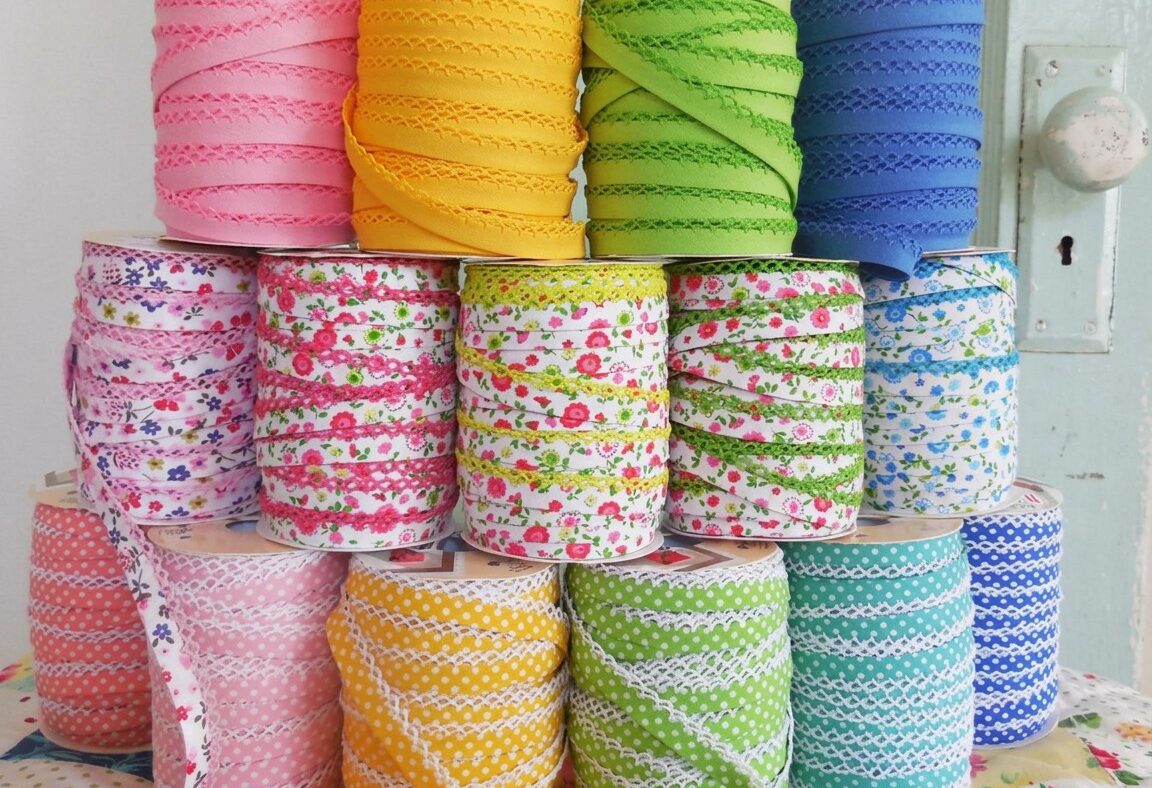
- Floral and Polka Dot Print Tapes: Patterned bias bindings introduce contrasting details to solid textiles. Pastel palettes featuring pink, yellow, soft green, and baby blue florals or mini dot prints allow you to enclose raw edges while adding a decorative interior or exterior accent.
- Vintage and Decorative Lace Edges: Woven bias tape combined with an attached delicate lace trim creates an all-in-one edge finish. These trims feature a flat cotton fold designed to sandwich raw seam allowances, paired with an exposed scalloped lace border that extends past the hemline.
Pro tip: When pairing bias trim with lace borders to lightweight or medium fabrics, check that the lace section is made from 100% cotton thread so it shrinks at the exact same rate as your base cloth during washing.
Sourcing Quilting Cotton and Base Fabrics
The decorative trims you select require a stable, well-woven base fabric to support their weight without sagging.
Independent Fabric Shops
Independent brick-and-mortar and boutique online fabric shops specialize in curated collections of quilting cotton 4 oz/sq yd (135 g/sm). This specific mid-weight plain weave provides a stable structure for applying bias tape, flat lace, and decorative topstitching. Independent shops frequently source from smaller design houses that print short runs of unique designs, giving you access to prints that stand apart from big-box inventory.
Deadstock and Surplus Sellers
Deadstock retailers purchase leftover yardage from garment manufacturers and design houses that would otherwise go unused. Sourcing your base fabric through surplus sellers gives you access to designer-grade cottons, unreleased color variations, and high-thread-count weaves. When shopping for deadstock quilting cotton, always check the listed fabric weight in ounces or grams per square meter to verify it can support your chosen decorative notions.
Online Marketplaces for Hidden Treasures
Once you identify the structural requirements of your base fabric, online platforms provide access to global sellers offering rare notions.
- Global Artisan Platforms: Direct-to-consumer artisan marketplaces allow you to purchase directly from independent makers who produce custom-folded bias tapes, hand-dyed rickrack, and vintage-reproduction trims. You can often request custom widths, such as 1/2 inch (5.1 cm) or 1 inch (2.5 cm) double-fold tapes, made from hard-to-find printed cottons.
- Specialty Vintage Curators: Vintage-supply shops on auction and specialty resale platforms stock deadstock trims from mid-century sewing mills. These shops are prime locations for discovering genuine woven cotton bobbin lace, pastel polka dot binding spools, and wooden spool collections that offer unmatched texture.
How to Identify Quality When Buying Online
Purchasing trims and textiles without handling them in person requires careful evaluation to avoid low-grade materials.
- Verify the Fiber Breakdown: Read the technical description to confirm the item is natural cotton or linen rather than unbreathable polyester. Synthetic trims can melt under the high heat of a dry iron set for cotton fabrics.
- Inspect the Edge Weave: Examine listing photos under close magnification to check for loose threads or irregular picot loops along decorative lace edges. A quality lace trim features tight, interlocking stitches that resist fraying when stitched through.
- Check the Bias Cut Alignment: Ensure patterned bias bindings are cut on a true 45-degree angle. True bias allows the tape to curve around corners without creasing, whereas tapes cut on the straight grain will buckle when applied to rounded edges.
- Review Seller Swatch Options: Order small sample swatches or 1-yard (0.9 m) test cuts when you plan to buy notions in bulk, ensuring the dye lot matches your base quilting cotton.
Pro tip: Always perform a water-bleed test on brightly colored or pastel-printed bias tapes by dampening a 2-inch (5 cm) scrap with warm water and pressing it against white cotton with a hot iron to check for colorfastness.
| Trim Type | Primary Fiber | Best Base Fabric Match | Recommended Sewing Needle |
|---|---|---|---|
| Solid Cotton Bias Binding | 100% Cotton | Quilting cotton 4 oz/sq yd (135 g/sm) | Universal 80/12 |
| Floral Print Folded Tape | 100% Cotton | Medium-weight linen or cotton | Universal 80/12 |
| Lace-Edged Bias Trim | Cotton / Cotton Blend | Quilting cotton 4 oz/sq yd (135 g/sm) | Universal 70/10 or 80/12 |
| Woven Polka Dot Trim | 100% Cotton | Chambray, lawn, or quilting cotton | Universal 80/12 |
Building a Versatile Notions Stash
After acquiring unique trims from digital marketplaces and independent shops, proper storage prevents your collection from tangling or deteriorating.
Organizing Tapes and Trims
Wind loose yardage onto cardboard notion cards or wooden spools to keep the pre-folded edges crisp and free of unintended creases. Secure the ends with fine glass-head pins rather than tape, which can leave a sticky adhesive residue on delicate cotton fibers. Sort your notions by color family—such as pastel pinks, soft yellows, and muted blues—so you can quickly audition accents against base fabrics.
Stocking Essentials
Keep a balance of neutral and novelty notions in your sewing space. While specialty floral and polka dot bindings add character to accent pieces, maintaining a supply of 1/2 inch (5.1 cm) double-fold white and cream bias tapes ensures you always have stable structural bindings ready for internal seam finishes.
Pro Tips for Sourcing on a Budget
Expanding your sewing stash with distinctive supplies does not require high spending if you shop strategically.
- Buy Mill Remnants and Scrap Bundles: Many independent fabric sellers offer grab bags of bias tape roll ends, lace offcuts, and fabric scraps sold by weight at a steep discount.
- Repurpose Vintage Linens: Estate sales and thrift stores provide vintage cotton handkerchiefs, tea towels, and pillowcases with handmade lace trims that you can carefully remove with a seam ripper and repurpose onto new projects.
- Split Bulk Notion Rolls: Specialty trim distributors often sell bias binding on 25-yard (22.8 m) or 50-yard (45.7 m) industrial spools; consider splitting wholesale rolls with sewing peers to reduce the cost per yard.
Common Sourcing Mistakes to Avoid
Even seasoned crafters encounter buying mistakes when sourcing trims and base fabrics from unfamiliar sellers. One frequent issue is mixing incompatible fiber types, such as attaching cheap nylon lace to a 100% quilting cotton base. When pressed with a hot iron, nylon trim will scorch or melt onto your cotton fabric, permanently ruining the seam.
Another common mistake is purchasing single-fold bias tape when your project calls for double-fold bias binding. Single-fold tape has both raw edges folded inward toward the center, but it requires an extra pressing step to fold it in half before it can cleanly encase an edge. Always verify the fold style and width measurements in the merchant’s product description before placing an order.
Frequently Asked Questions
Where can I buy vintage lace trims online?
Online vintage marketplaces, curated antique dealer platforms, and specialized estate sale supply shops are common sources for genuine vintage lace. Look for listings that specify fiber content, weave type, and yardage length to ensure you receive clean, usable cotton trims.
How do I know if bias binding is good quality?
High-quality bias binding is cut on a precise 45-degree angle from woven cotton, has clean and even folds, and maintains a consistent width throughout the spool. It should feel pliable and stretch easily around curves without fraying or exposing uneven raw edges along the interior crease.
What is deadstock fabric and where can I find it?
Deadstock fabric refers to leftover, surplus textiles from garment factories, fashion design studios, and textile mills that were not used during production runs. You can find deadstock cottons through specialty online fabric retailers that focus on sustainable inventory and textile rescue platforms.
Can I make my own bias binding to match unique prints?
Yes, you can create custom bias binding using any lightweight or medium-weight cotton print cut into continuous strips along the true bias grain. Running the strips through a standard metal bias tape maker tool while pressing with a hot iron creates crisp, evenly folded binding tapes in minutes.
Start Curating Your Fabric and Notions Stash
Developing an eye for specialty materials opens up endless design options for your sewing craft. Knowing where to buy unique fabrics and notions gives you the freedom to step away from mass-produced looks and select textiles with genuine personality. As you source your next collection of pastel trims, printed bias tapes, and base cottons, always order a small sample to test its washability and feel before sewing a full project.