In this post
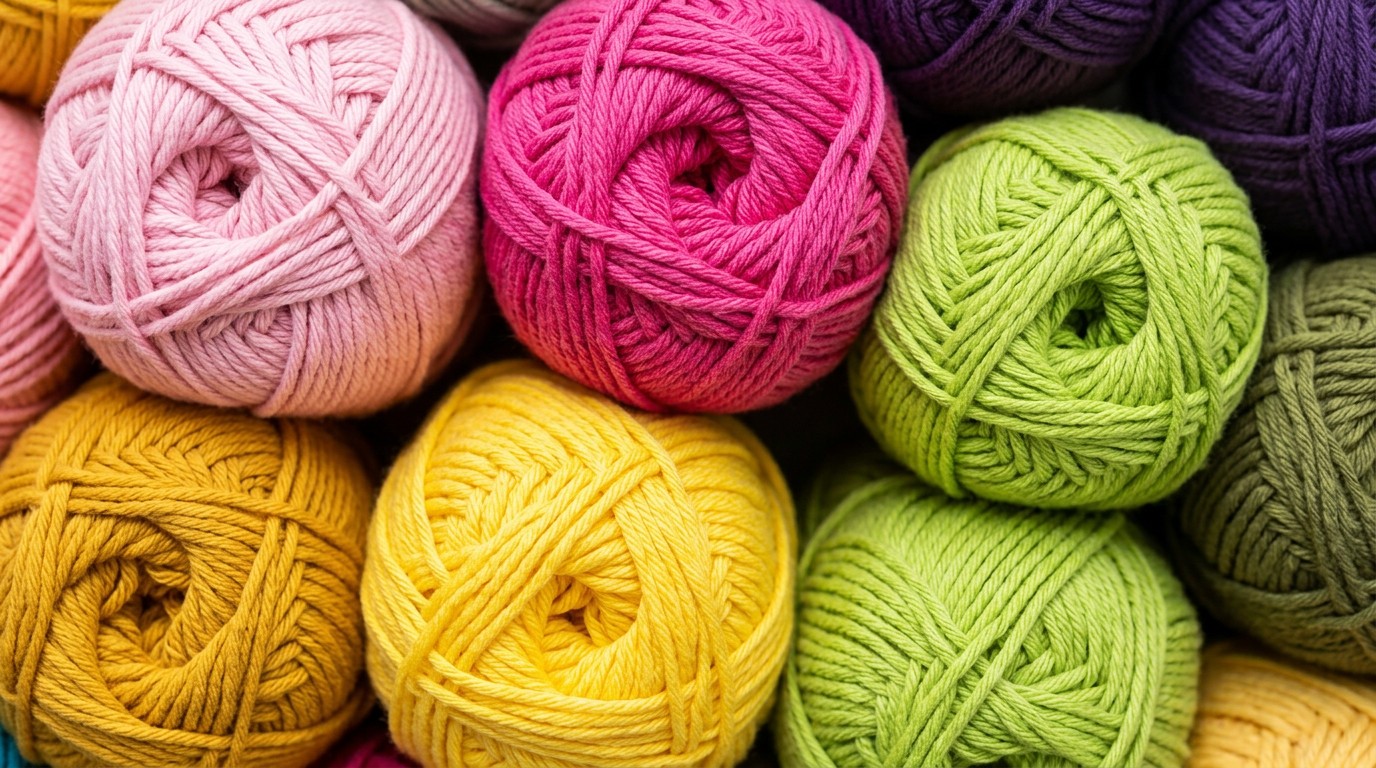
Working with a vibrant collection of yarn opens up endless creative possibilities for your crochet hooks. When you have an assortment of worsted weight (4) cotton or acrylic yarn in bold shades like light pink, hot pink, mustard yellow, bright yellow, lime green, olive green, and purple, deciding what to make is the first step. You will learn how to pair stitch patterns with your materials, balance multiple color changes, and maintain neat tension across every piece. With a standard 5 mm / H-8 crochet hook, a yarn needle, and basic stitches, you can turn loose skeins into finished handmade pieces with clean, crisp stitch definition.
How to Choose the Right Yarn Project for Your Skill Level
Selecting the right project begins with assessing your yarn weight, fiber content, and tool pairings. Worsted weight (4) yarn is the industry standard for beginners because its medium thickness makes individual loops easy to see and count. When paired with a 5 mm / H-8 crochet hook, worsted cotton or acrylic produces a balanced fabric with clear stitch definition. The standard target gauge for this yarn weight is 16 sts x 12 rows = 4 in / 10 cm in half double crochet (hdc), which offers a stable foundation that is neither too stiff nor too loose.
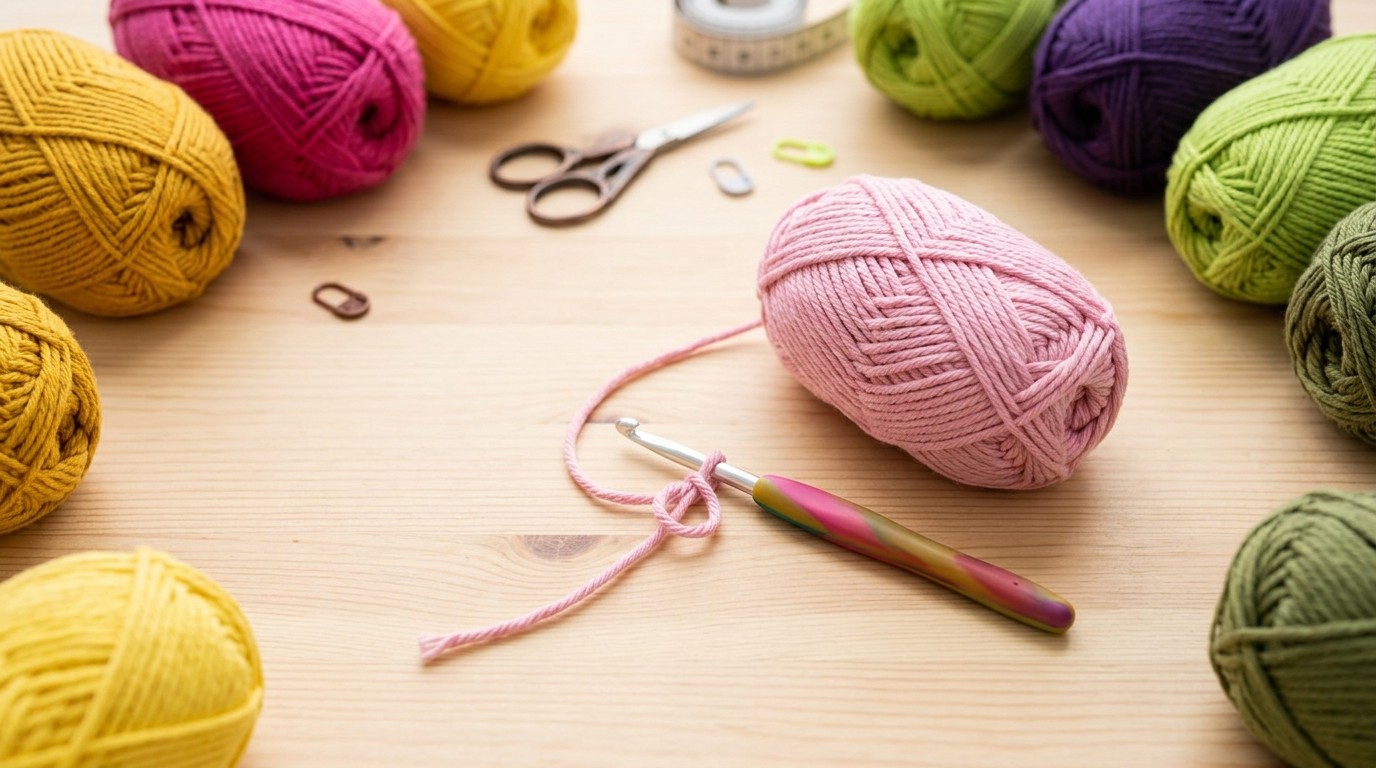
Your choice of fiber directly affects how your finished project behaves in daily use. Worsted weight acrylic yarn provides elasticity, softness, and easy care, making it an ideal choice for wearables, blankets, and plush toys. Worsted weight cotton yarn has minimal stretch and absorbs moisture well, which makes it suitable for functional household items like dishcloths, sturdy market totes, and coasters. Matching the physical properties of your fiber to the demands of the finished object ensures your work holds its shape and lasts.
Pro tip: Make a 4 x 4 in (10 x 10 cm) gauge swatch in half double crochet before starting any sized accessory. If you count fewer than 16 stitches across 4 inches, switch to a smaller hook; if you count more, switch to a larger hook.
Consider the construction method before committing your yarn to a specific design. Flat rows worked back and forth in turning rows are simplest for learning edge control, while projects worked in joined rounds or continuous spirals introduce shaping techniques like increases and decreases. Starting with straightforward geometric designs allows you to practice color changes cleanly without juggling complex stitch counts.
| Project Category | Recommended Project | Primary Fiber | Key Stitches | Skill Level |
|---|---|---|---|---|
| Home Decor | Granny Square Blanket | Worsted acrylic | ch, dc, sl st | Beginner |
| Home Decor | Crochet Basket | Worsted cotton | ch, sc, sl st | Beginner |
| Accessories | Striped Crochet Scarf | Worsted acrylic | ch, hdc | Beginner |
| Accessories | Market Bag | Worsted cotton | ch, sc, dc | Beginner |
| Accessories | Beanies and Hats | Worsted acrylic | ch, hdc, sl st | Beginner |
| Small Makes | Amigurumi Toys | Worsted acrylic | ch, sc, sl st | Beginner |
| Small Makes | Dishcloths | Worsted cotton | ch, sc, hdc | Beginner |
| Small Makes | Coasters | Worsted cotton | ch, sc, sl st | Beginner |
Vibrant Home Decor Ideas Using Your Yarn Stash
Decorating your living space with handmade items lets you use multiple yarn colors in single, cohesive designs.
-
Colorful Granny Square Blanket
A classic granny square blanket is an adaptable project for an assorted collection of worsted weight acrylic yarn. Worked in joined rounds using double crochet (dc) clusters and chain spaces, each individual square can feature a unique sequence of pink, mustard yellow, lime green, and purple. The modular nature of granny squares means you can assemble them into any finished size, from a small lapghan to a full bedspread. For balanced color distribution across the blanket, use a single unifying shade like olive green or neutral cream for the final outer round of every square before joining them together with a slip stitch (sl st) seam.
-
Crochet Basket
Using worsted weight cotton yarn and dense single crochet (sc) stitches creates a rigid, freestanding storage basket for organizing craft supplies. Work the base in a flat circle using standard increase rounds until it reaches your desired diameter, then work straight up in un-increased rounds to form the walls. To give the basket extra structural integrity, work your stitches tightly using a 5 mm / H-8 hook or hold two strands of worsted yarn together. Alternate wide stripes of bright yellow and olive green to create bold visual contrast that masks yarn joins along the seam line.
Fun Accessories and Everyday Essentials
Wearable and portable projects allow you to showcase smooth plied yarn textures through functional, everyday pieces.
-
Striped Crochet Scarf
A striped scarf worked in half double crochet (hdc) provides practical experience for practicing clean color changes. Using worsted weight acrylic yarn, crochet across a foundation chain of approximately 24 to 30 stitches to achieve a width of 6 to 8 inches (15 to 20 cm), continuing in rows until the scarf measures 60 inches (152 cm) in length. Alternating stripes of hot pink, mustard yellow, and lime green every four rows creates a balanced graphic pattern. Because worsted acrylic holds warmth while remaining lightweight, the finished scarf drapes comfortably without excessive bulk around the neck.
-
Market Bag
A reusable market tote bag requires the durability and zero-stretch strength of worsted weight (4) cotton yarn. Beginning at the solid base with single crochet rounds, transition into an open mesh body by alternating double crochet stitches and chain-2 spaces. This open network allows the bag to expand when carrying produce or groceries while maintaining structural stability at the stress points. Use vibrant purple and bright yellow cotton to create wide horizontal bands, finishing the top edge with several rounds of dense single crochet and reinforced strap handles.
-
Beanies and Hats
Crocheted beanies can be constructed either top-down in joined rounds or side-to-side in ribbed rows using back-loop-only half double crochet. A standard adult beanie fits a head circumference of 21 to 23 inches (53 to 58 cm) with a finished height of 8 to 8.5 inches (20 to 22 cm). Working with worsted weight acrylic yarn ensures the hat maintains sufficient elasticity to grip the head securely without over-stretching over time. Use your light pink and olive green skeins to add color blocks or thin accent stripes around the brim.
Pro tip: When working side-to-side ribbed hats, count your stitches at the end of every row before chaining. Dropping the final turning stitch is the most common reason a rectangular hat panel accidentally tapers into a triangle.
Quick Small Projects and Scrap Yarn Ideas
When you have partial skeins or want rapid results between larger tasks, small-scale projects put every yard of material to practical use.
-
Amigurumi Toys
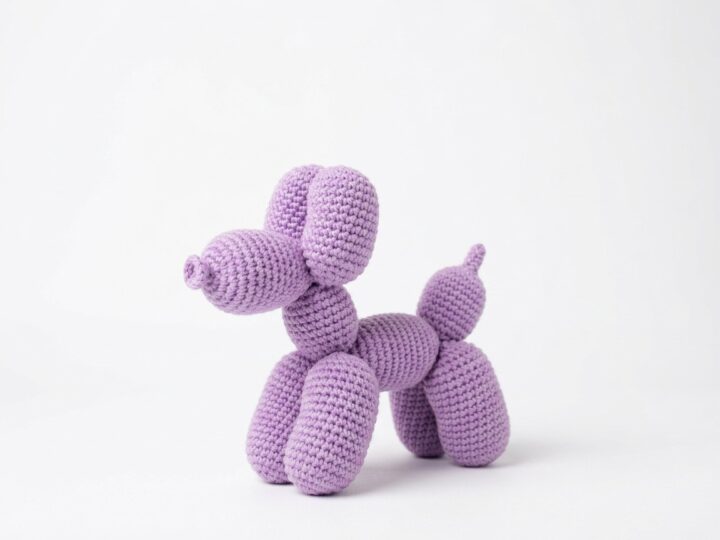
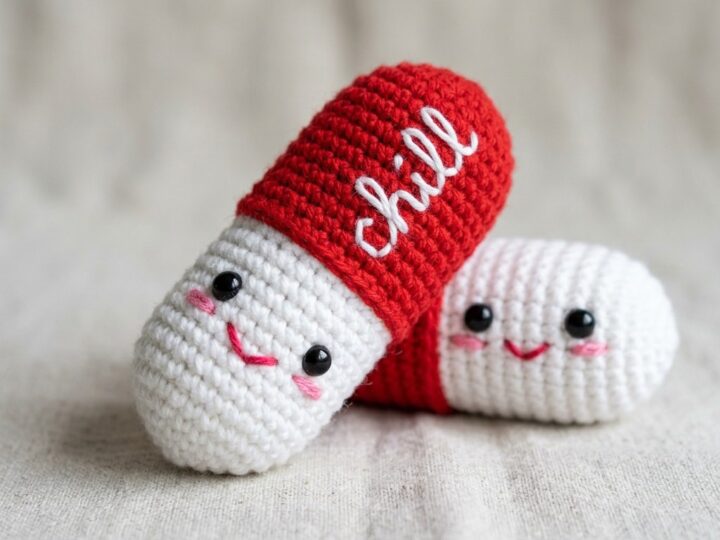
Small stuffed toys and plush shapes work well for utilizing short lengths of colorful worsted weight acrylic yarn. Worked in continuous spiral rounds of tight single crochet, amigurumi requires high stitch definition so the interior stuffing remains completely hidden. You can construct small spheres, animal bodies, or playful geometric characters by combining hot pink, bright yellow, and lime green remnants. Note that small items containing safety eyes, buttons, or small attached limbs are not suitable for children under 3 years of age due to potential choking hazards from small parts.
-
Dishcloths
Dishcloths measuring 7 to 9 inches (18 to 23 cm) square are practical utility items made exclusively with 100% worsted weight cotton yarn. Cotton absorbs water rapidly, withstands repeated friction, and remains durable when wet, unlike synthetic fibers which melt under high heat. Simple stitch textures such as alternating single crochet and half double crochet rows create a mildly abrasive surface that cleans cookware effectively without scratching surfaces. A single 50-gram ball of cotton yarn is typically enough to complete one full-sized dishcloth.
-
Coasters
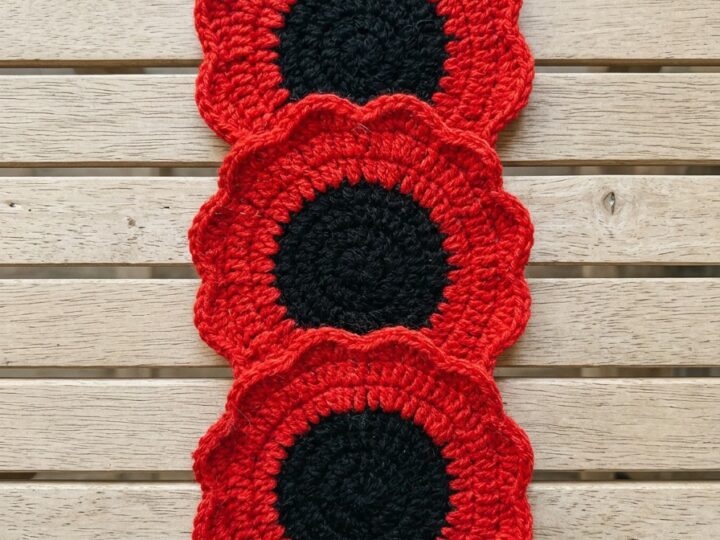
Crochet mug coasters are fast scrap-busters that protect tabletops from moisture and heat. Work them in flat circles using single crochet rounds up to 4 inches (10 cm) in diameter, or work 4 x 4 inch squares in solid double crochet. Always use worsted weight cotton yarn for coasters because acrylic yarn can soften or deform under hot mugs. Combine mustard yellow centers with purple outer borders to create high-contrast accent pieces for your living room or kitchen.
Expert Tips for Crocheting Faster and Cleaner
Refining your physical technique ensures your finished items look uniform, professional, and structurally sound.
- Wind Yarn into Center-Pull Cakes: Before starting your project, wind loose or tangled skeins into neat center-pull balls or cakes using a yarn winder or by hand around your fingers. Center-pull balls prevent the skein from rolling across the floor, keep your yarn clean, and maintain steady, unhindered feeding tension as you pull from the core.
- Check and Maintain Your Gauge: Consistent tension is essential for matching the standard gauge of 16 sts x 12 rows = 4 in / 10 cm in half double crochet. Hold your yarn consistently across your index finger and avoid pulling down sharply after completing a stitch, as tightening the working loop shrinks the top loops and makes the next row difficult to work into.
- Execute Seamless Color Changes: Complete every color transition on the final yarn-over of the previous stitch. When you have two loops left on your hook for a single crochet (or three loops for an hdc), drop the old color, place the new yarn strand over the hook, and pull it through the remaining loops to complete the stitch. This ensures the loop sitting on top of the stitch matches the upcoming color row perfectly.
- Weave in Yarn Tails Securely: Leave a tail of at least 6 inches (15 cm) whenever you cut your working strand. Thread the tail onto a blunt yarn needle and weave it through the interior of solid stitches in three alternating directions (forward, backward, and forward again). This three-point locking method prevents ends from popping out during regular handling or machine washing.
Pro tip: When weaving ends into cotton items, split the plies of the surrounding stitches slightly with your tapestry needle. Cotton does not cling to itself as easily as other fibers, so piercing the yarn strands helps secure the tail.
Frequently Asked Questions
What can I make with assorted worsted weight yarn?
You can make a wide range of beginner projects including granny square blankets, striped scarves, market bags, storage baskets, beanies, amigurumi toys, dishcloths, and coasters. The key is matching the fiber type to the project: use cotton yarn for items exposed to heat or moisture, and acrylic yarn for soft, flexible wearables and blankets.
How do I choose the right crochet hook for worsted weight yarn?
A 5 mm / H-8 hook is the standard recommended size for medium worsted weight (4) yarn, producing a balanced fabric with a gauge of 16 sts x 12 rows = 4 in / 10 cm in hdc. You can adjust hook sizes as needed to achieve your desired fabric tension for different projects.
How do I change colors cleanly in crochet?
To change colors cleanly, work the final stitch of the old color until the last step where you have the final loops remaining on your hook. Yarn over with the new color and pull it through those remaining loops to finish the stitch, which places the new color neatly on your hook ready for the next stitch.
How do I prevent my crochet edges from becoming uneven?
Uneven edges happen when you accidentally skip or add stitches at the ends of rows. Always count your stitches at the end of each row, ensure you do not crochet into the base of the turning chain unless specified, and place a removable stitch marker into the first and last stitch of every row to clearly mark your turning points.
Start Crafting with Your Yarn Collection
Transforming an assorted collection of colorful worsted weight yarn into finished handmade items is an achievable goal for every beginner. By pairing your 5 mm / H-8 hook with the appropriate acrylic or cotton fibers, you can confidently create everything from sturdy kitchen dishcloths to vibrant granny square blankets. Before you begin your next project, take time to wind your skeins and check your gauge swatch. Pick your favorite color palette, set your foundation chain, and enjoy building your crochet skills one stitch at a time.